Velvet Flocking
As I mentioned in the article about boxes: The velvet lining is the main part of the packaging. It turned out that finding a company in the Czech Republic to do this isn't easy. It's simpler and quicker to order something from England than from the next town over.
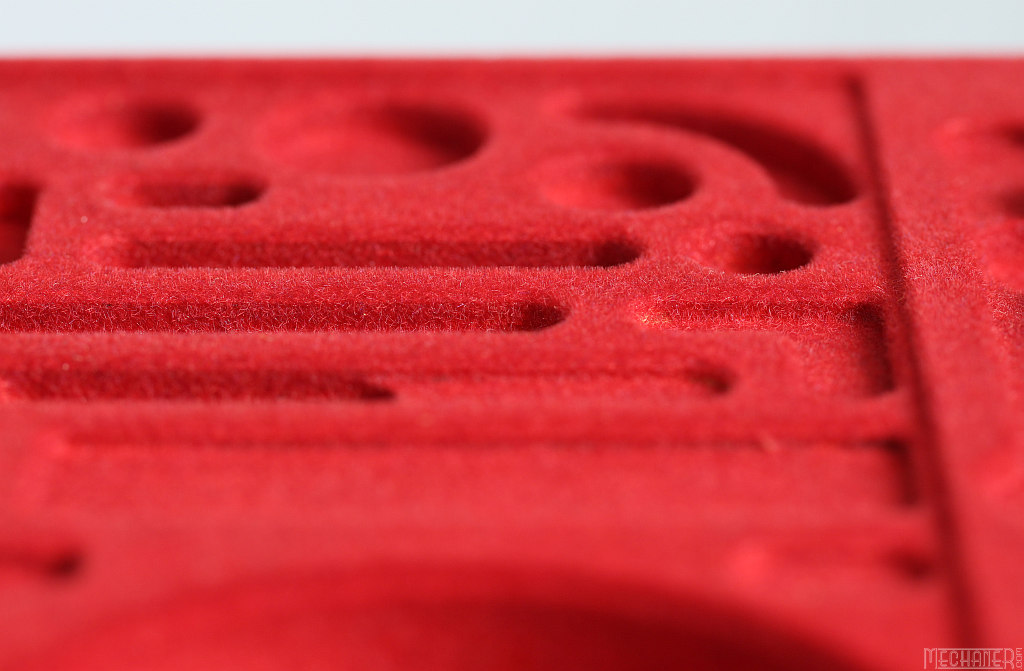
The velvet surface is created by flocking. "Flock" refers to short textile fibres that are glued to a base. Depending on the length and thickness of the fibres, you get different surfaces, from the fine velvets in jewellery boxes and window seals to the coarse pile on car carpets.
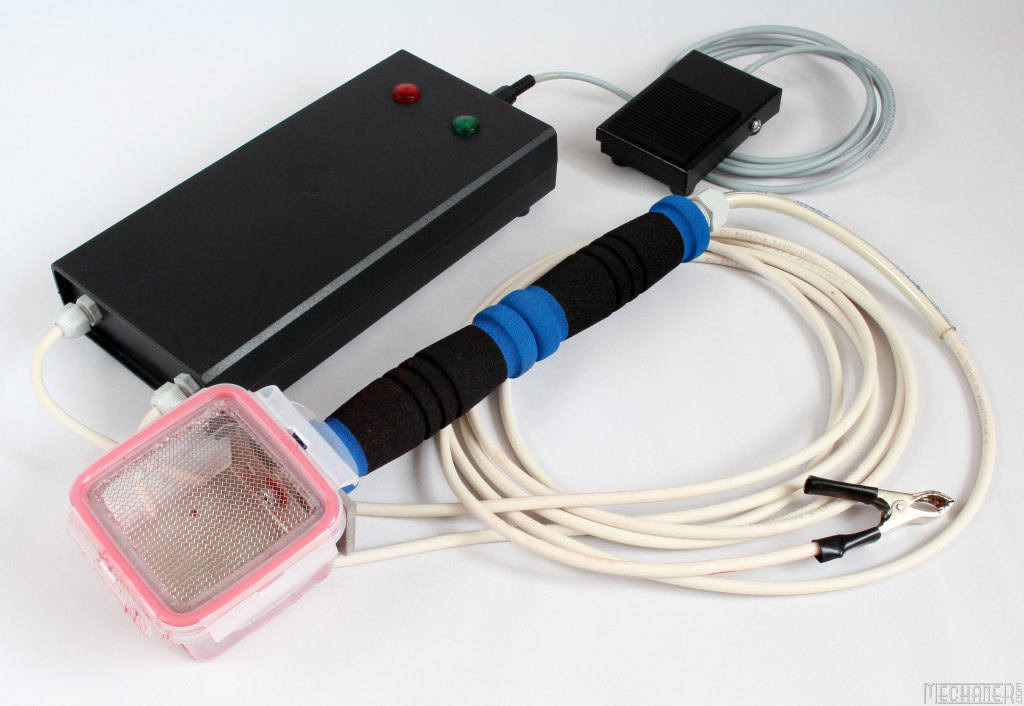
You can't just sprinkle flock onto glue, of course. To achieve a velvet surface, the flock must be electrostatically charged so that the fibres stand perpendicular to the surface. For this, you need a flocking machine. I wasn't keen on spending £500 on something I only needed to try out, so I took inspiration from railway modellers and made my own flocking machine.
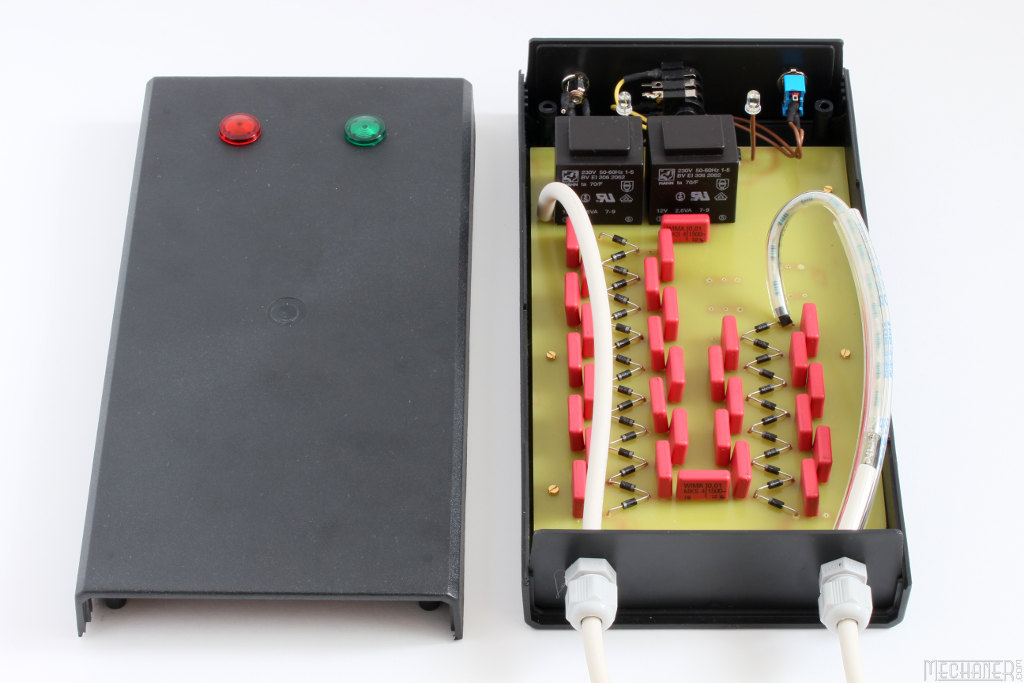
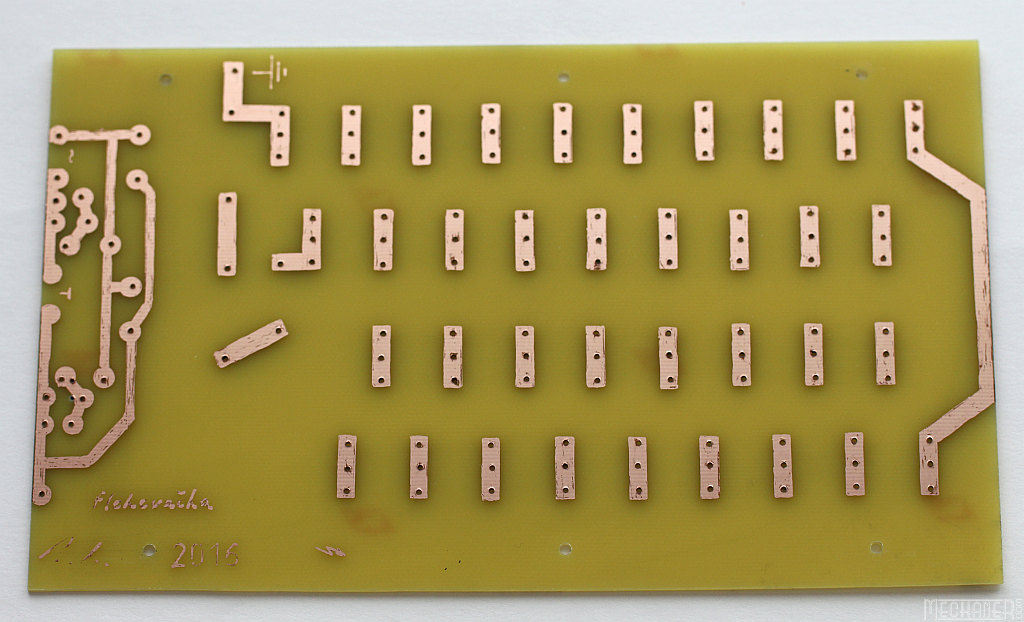
Railway modellers use similar devices to glue realistic-looking grass onto their layouts. In my version, it's essentially a thirty-fold Delon multiplier, powered by two transformers connected in reverse. It's one of the few gadgets I've made that I'm genuinely pleased with, as it didn't eat up a month of my time and still does exactly what it's supposed to. It only took a weekend, including drawing and etching the board. I hadn't done this since primary school, so I was a bit surprised by the speed of etching with acid and peroxide, which was a tad more vigorous than I remembered.
19 March 2017